A Disturbing Display: Reflections on a Divided Nation
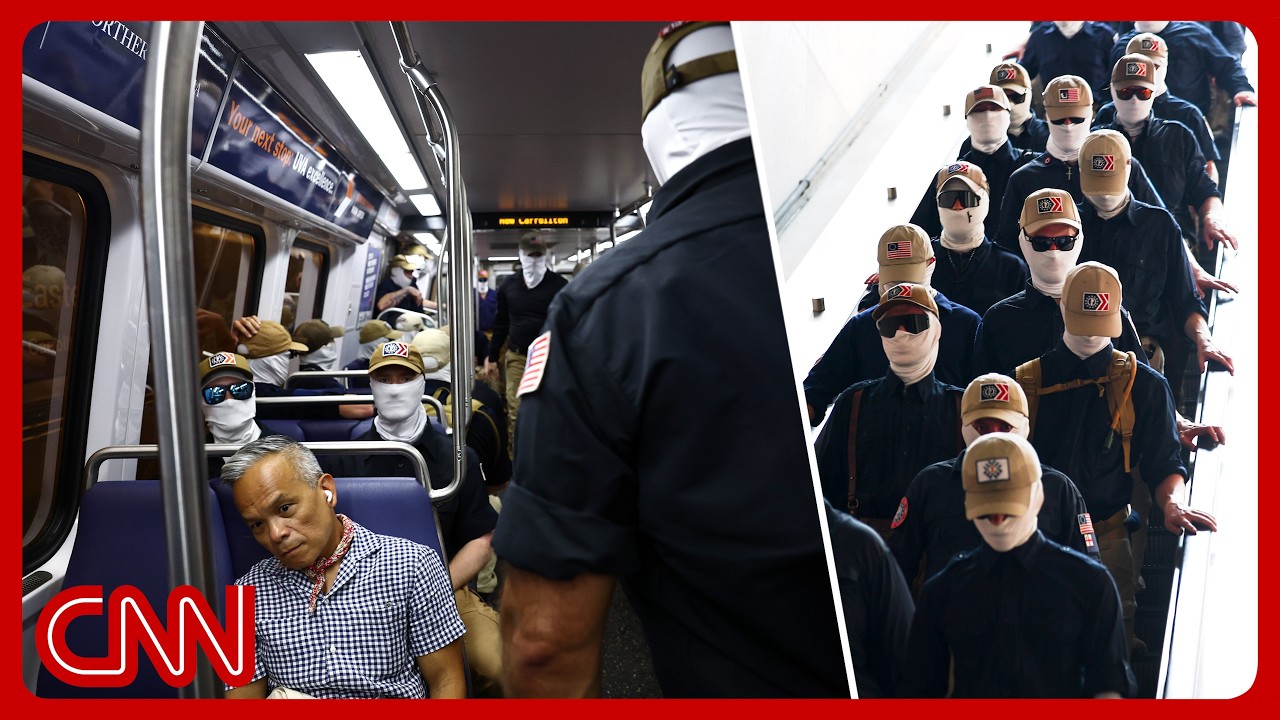
This past weekend, amidst jubilant celebrations marking the 250th anniversary of our nation’s founding, a jarring and unsettling scene unfolded in Washington, D.C. Masked members of the white supremacist organization, Patriot Front, took to the streets, brandishing Confederate flags and chanting slogans such as "reclaim America." This stark contrast between communal celebration and the manifestations of hate was encapsulated in a powerful photograph of a young Black woman silently seated on a metro car, surrounded by these masked figures.
Roswell Ensina, who was also on that metro car, shared her experience in a candid interview. The atmosphere was charged with dread as she rode toward the New Carrollton station, initially surrounded by families and tourists celebrating the Fourth of July. The car was lively and jovial, filled with the colors of patriotism. But as the joyous crowd emptied out, it was replaced by a wave of men clad in dark clothing and masks—a scene that prompted instinctive fear.
For Ensina, the presence of these masked individuals was both alarming and surreal. She recounted feeling an urge to document their appearance, realizing that, if necessary, she would need details about their attire to convey a clear account of the situation. She texted friends to alert them, subtly indicating that something was awry.
While Ensina speculated about their identity, her immediate assumption was troubling. The masked group evoked thoughts of white supremacy, a reality she couldn’t ignore. Her position at the U.S. Capitol Historical Society added layers of complexity to her apprehension. This moment, she felt, deserved remembrance—a place in history that can neither be sugar-coated nor ignored.
Interestingly, despite their unsettling presence, the group’s behavior on the train was strikingly civil. They engaged in conversations among themselves, introducing one another and discussing mundane topics. This dichotomy of civility amidst their sinister purpose left Ensina perplexed. How could individuals harboring such hateful ideologies appear so normal in their daily interactions?
Throughout her ride, amidst the chaos and confusion, Ensina remained largely alone, an observer in her own right. She mentioned that the masked men were so numerous that they likely occupied multiple metro cars. Her isolation heightened her feelings of vulnerability. She recognized the significance of the image captured that day; it served as a powerful representation of present-day America—a microcosm of the nation’s struggle with its complex narrative.
"I moved to this country as an infant," Ensina shared, reflecting on her own personal history. Her tale is often perceived as the quintessential American story, yet her experience on that metro ride starkly contrasted with the ideals of liberty and equality she holds dear. The juxtaposition between her narrative and the actions of the Patriot Front is stark and, sadly, indicative of the deeper divisions in the nation.
The disturbing occurrence also elicited responses from those in power, including Doug Bergam, the Interior Secretary, who emphasized the importance of free speech, even when it borders on the repugnant. While the right to free expression is a bedrock principle of American democracy, his comments sparked debate about the boundaries of this freedom, especially in light of hate speech.
Critics argue that while dissenting opinions can provoke necessary discourse, they cannot equate to the intolerance displayed by groups like Patriot Front, which threaten American values. Observers noted a disconnect; while the Secretary condemned the group’s ideology, his remarks seemed to inadvertently equate their actions with other forms of protest, thereby diminishing the severity of their hate-fueled agenda.
The significant lack of direct condemnation from higher levels of government was palpable on this emblematic day. Many felt it was a missed opportunity to unequivocally advocate for American principles of inclusion and acceptance.
In a nation celebrating its independence, the juxtaposition of patriotic fervor and the resurgence of extremism demands reflection. The discomfort felt by Ensina and many others serves as a reminder that America remains a divided country, grappling with its identity and ideals. This is a moment that cannot be overlooked; it reflects a need for renewed conversations about freedom, equality, and the responsibility that accompanies both.